
Sixty days into a listing, the sign in the yard starts to feel like a sentence. Showings dried up. And somewhere in a drawer sits a document you skimmed on a Tuesday afternoon, signed, and never looked at again. The document is your listing agreement, and it decides what happens next.
Plenty of Washington sellers assume they’re stuck until the expiration date. That’s not quite right. Washington law builds an exit into the statute itself, and knowing how that exit works gives you leverage you probably didn’t know you had.
Why Did You Sign a Listing Agreement in the First Place?
A broker in Washington can’t legally put your house on the Northwest MLS without a signed services agreement. The listing agreement is the price of admission to the biggest buyer pool in the state.
Most sellers sign for good reasons. You wanted professional photos, a Zillow syndication, a lockbox, and someone fielding calls from buyer agents in Ballard and Beacon Hill. Washington’s statewide median sold price landed at $587,538 in October 2026, down 2.1 percent from a year earlier, according to Redfin’s Washington housing market data. Softening prices make representation more valuable, not less.
Then there’s the sales conversation itself. Someone sat at your table, showed you comps, suggested a number that felt generous, and slid it across.
A few years back I worked with the adult children of an elderly homeowner in Puyallup who’d already signed one before they called me. Their agent told them the kitchen had to be gutted first, and the contractor’s estimate came back higher than what the kitchen would add to the sale price.
I keep seeing that pattern across Washington. Sellers sign it before they’ve decided what kind of sale they actually want.
What Does a Listing Agreement Lock You Into?
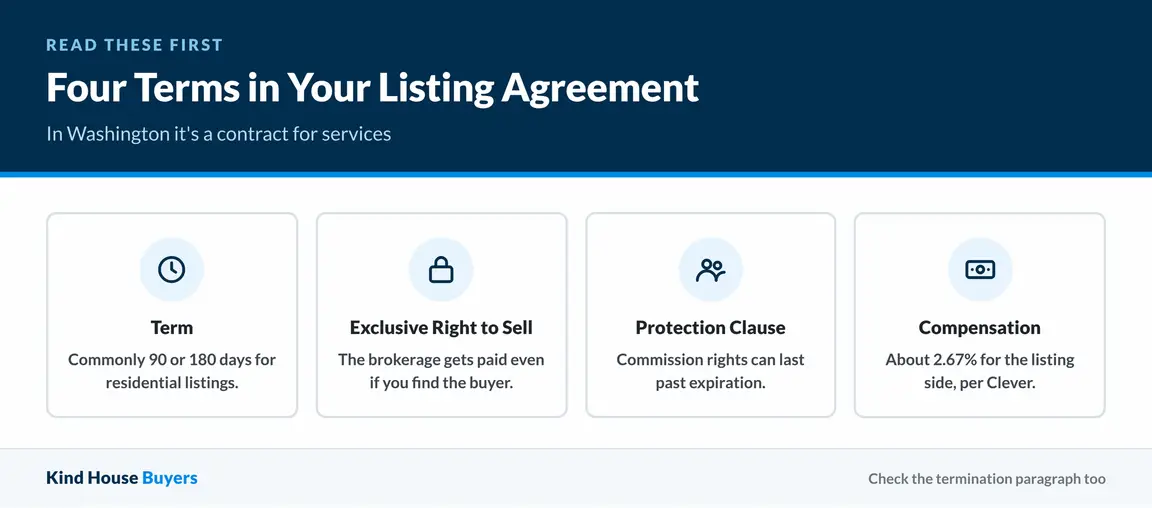
You might be thinking the agreement only binds you if the house sells. Wrong on both counts. In Washington, it’s a contract for services, and the broker’s right to payment can survive events you’d never predict, including a sale you arrange yourself.
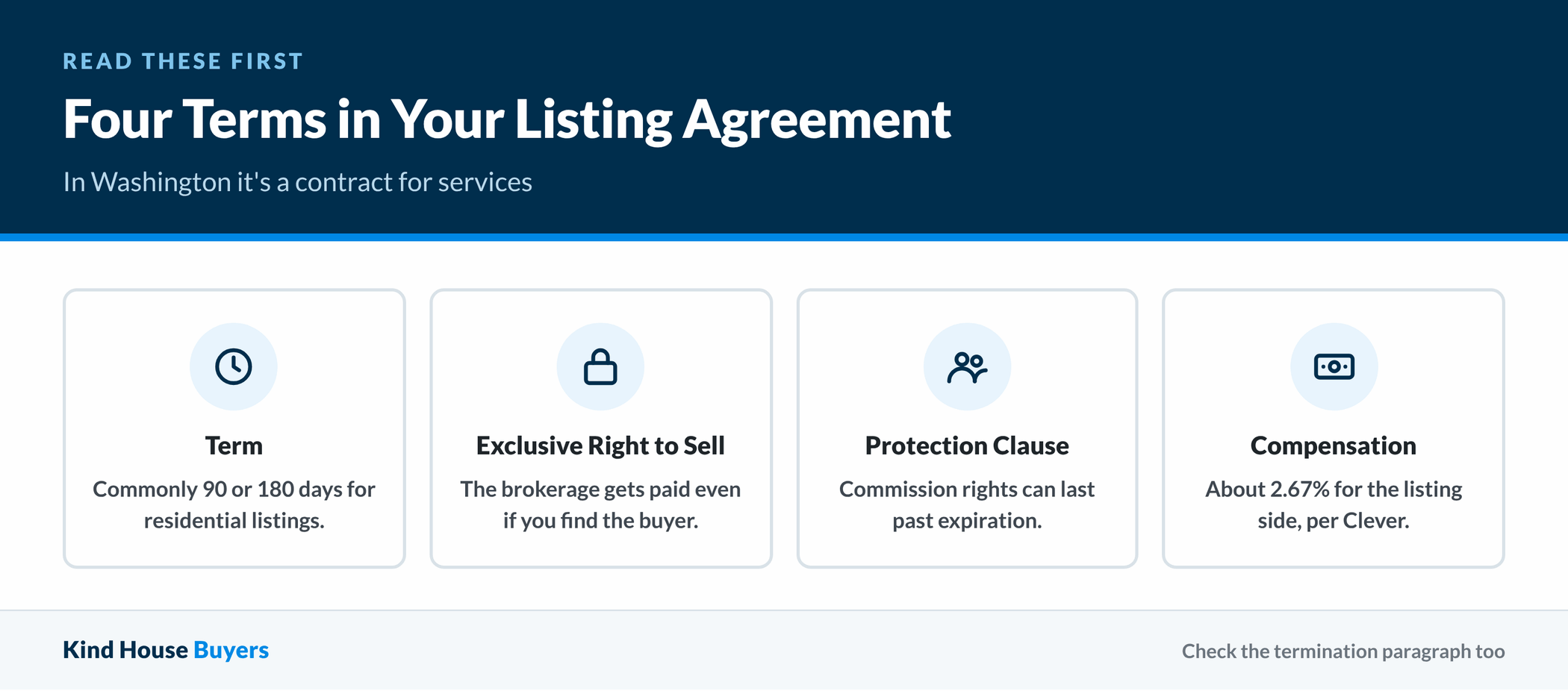
Four provisions deserve most of a seller’s attention. The term sets your end date, commonly ninety or one hundred eighty days in Washington residential listings. The exclusive right to sell clause means the brokerage gets paid even if your cousin buys the place. A protection or safety clause extends commission rights for a window after expiration if a buyer the broker introduced comes back around. And the compensation section spells out the percentage, which Clever’s Washington market research pegs at roughly 2.67 percent for the listing side.
Pull your copy out. Read the termination paragraph specifically, because many Washington brokerages write their own notice requirements into the form.
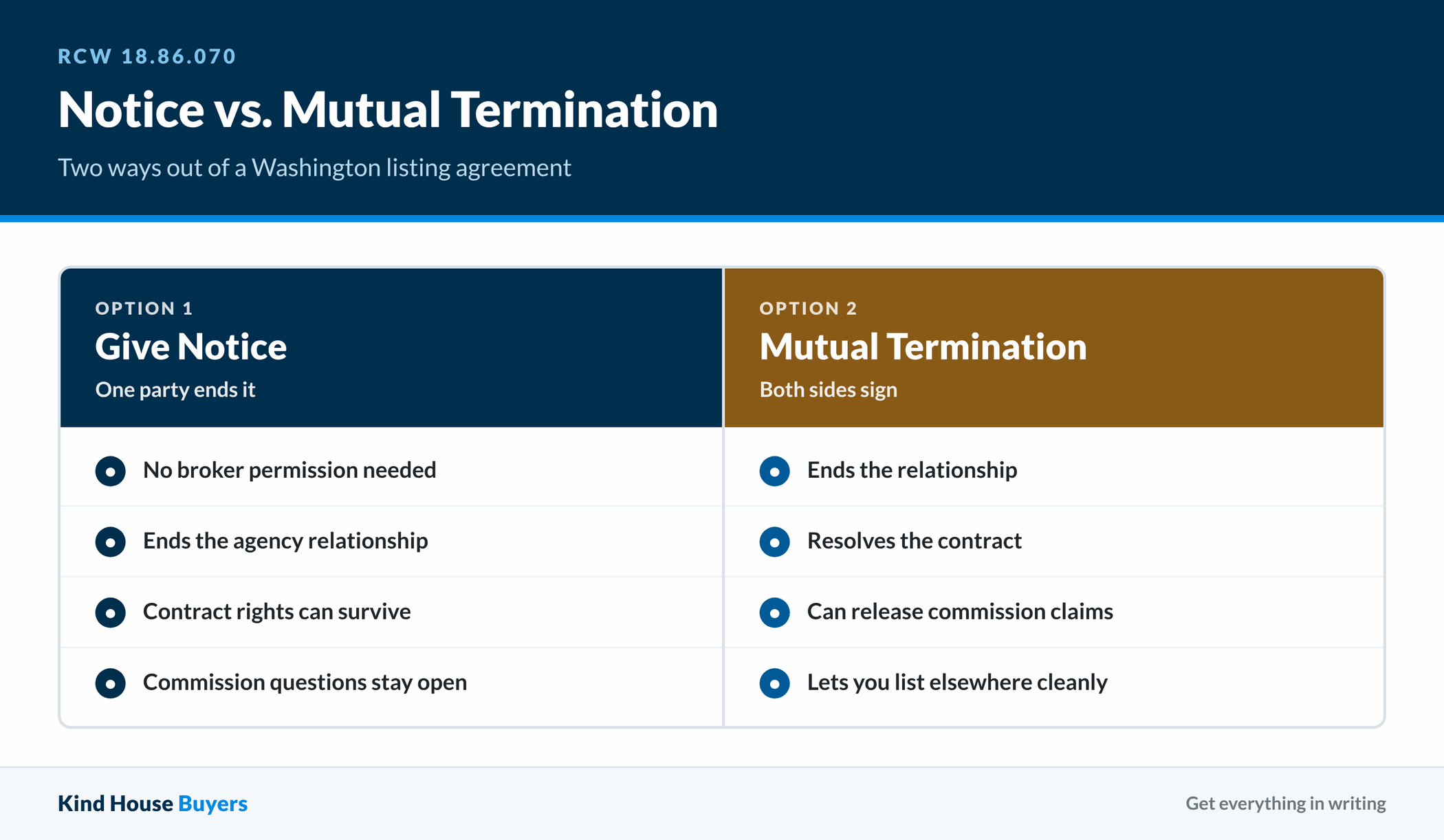
Here’s where state law enters. Under RCW 18.86.070, an agency relationship ends at the earliest of four events. These are the broker finishing performance, the agreed term running out, both parties terminating by mutual agreement, or one party giving notice to the other. You can read the full chapter on the Washington Legislature’s site. The statute also says termination by notice doesn’t wipe out either side’s contractual rights.
Ending the agency is one thing. Ending the money question is another, and it governs the money.
Can You Cancel a Listing Agreement with a Broker in Washington?
A Bellingham seller called me in March wanting out of a dead listing with ninety days left on the clock.
So yes. You can cancel it in Washington, and the statute itself gives you the mechanism. Either party may end the agency relationship by notice under RCW 18.86.070, which means you don’t need your broker’s permission to stop the representation. What you do need, if you want a clean break with no commission exposure, is a mutual termination signed by both sides.
Notice ends the relationship. Mutual agreement ends the relationship and resolves the contract. One of those lets you list elsewhere without looking over your shoulder.
Will your broker sign a release? In my experience across Washington, most will. Brokerages in Seattle, Vancouver, and Spokane run on reputation and referrals, and a designated broker rarely wants an unhappy seller telling the neighborhood about it.
The harder cases involve brokerages that spent real money up front. Drone footage of a waterfront lot on Hood Canal, staging, a print campaign: those costs give a broker a reason to negotiate rather than simply release you.
One more thing worth knowing. A Washington broker owes you duties that outlast it, including the duty to account for your money and to keep your confidential information private.
What Are Valid Reasons to Cancel a Listing Agreement?
Washington’s statute doesn’t require a reason at all. Nothing in RCW 18.86.070 conditions your right to give notice on the broker doing something wrong, a detail that’s often skipped entirely. Cause matters for one thing only: whether you owe money on the way out.
Weak reasons and strong reasons get treated differently in practice. A broker who missed showings, never held an open house, or listed your Kent rambler with four dark phone photos has handed you a real argument.
Pricing disputes are murkier. If your broker recommended a number and you overruled them, the stale listing is partly yours, so blaming the agent gets complicated fast. Spokane County homes sat a median of 32 days on market in October 2026, per this Washington county market report, so a listing well past that mark isn’t automatically broker failure.
Life changes count too. A job transfer to Boise, a death in the family, a diagnosis, a divorce that stalls everything: Washington brokers deal with these constantly and most respond like human beings.
Then there’s misconduct, which is its own category. Misrepresenting your property, failing to present an offer, or steering you toward a buyer the broker has an interest in are serious matters under Washington licensing law.
Change of mind is also a reason, even if it’s unpopular to say so. Some sellers conclude mid-listing that the retail route costs more in repairs, time, and showings than it returns. Deciding to cancel a listing agreement and sell as-is to a direct buyer like Kind House Buyers is a legitimate calculation, not a failure of nerve, and I’ve seen sellers second-guess themselves over it for no good reason.
How Do You Ask Your Broker to Release You From a Listing Agreement?
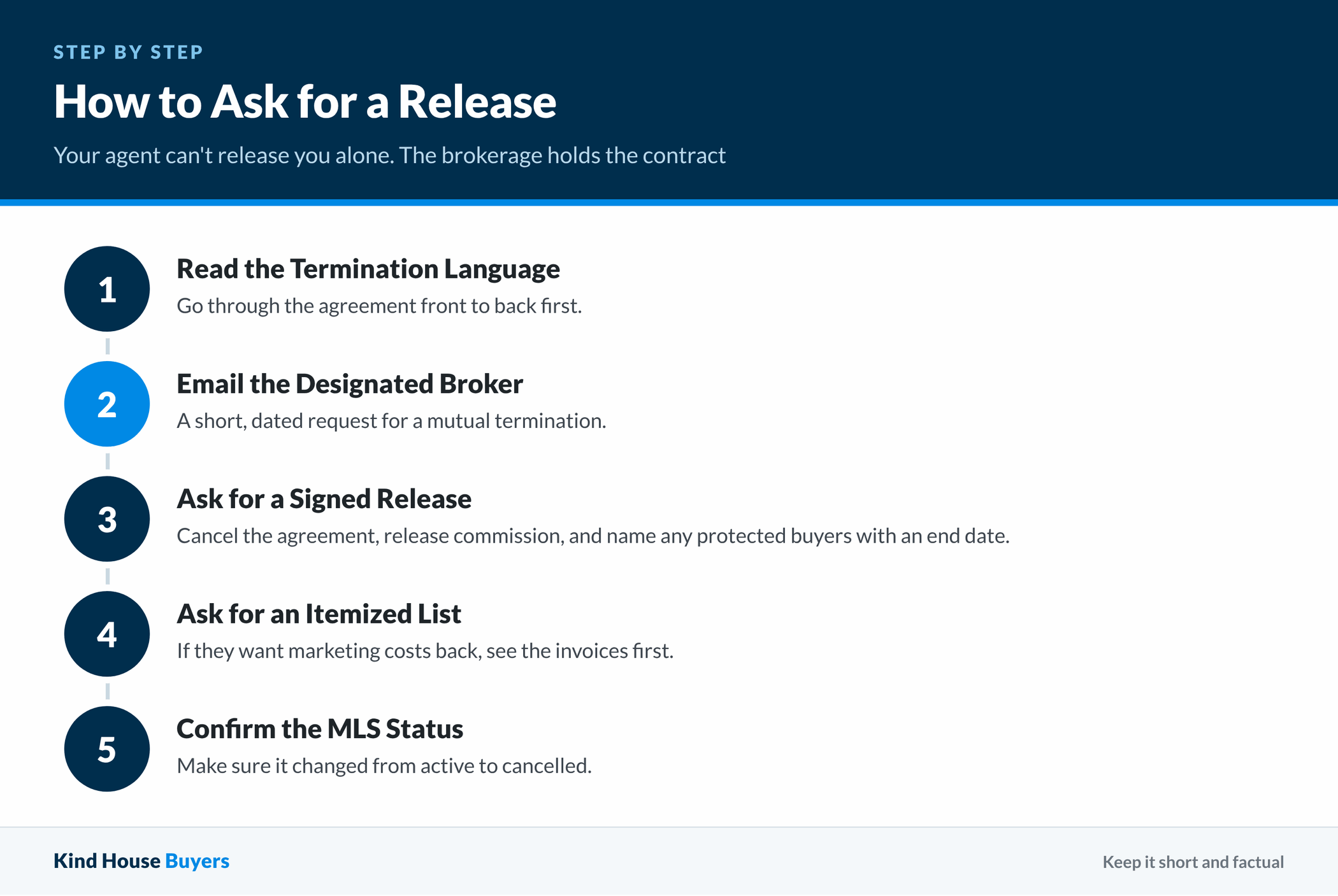
Call the designated broker, not your agent. That’s the single piece of advice that changes outcomes most often for Washington sellers, because your agent can’t release you from it on their own; the brokerage holds the contract.
Start by reading your agreement front to back and noting the exact termination language, then write a short, dated email requesting a mutual termination. Keep it factual: the property address, its start date, your request, and a clear statement that you want the listing withdrawn from the Northwest MLS. Nobody signs a release in response to a four-page accusation.
What should you ask for specifically? A signed termination agreement that cancels it, releases you from further commission obligation, and either eliminates the protection period or names every protected buyer in writing with an end date.
Tone does real work here. Washington brokerages talk to each other, especially in tighter markets like Olympia or Walla Walla, and a seller who handles the exit gracefully will have an easier time hiring someone new.
If the brokerage asks you to reimburse marketing costs, ask for an itemized list before you agree to anything. Photography and staging invoices are reasonable.
Get everything in writing, then confirm the MLS status changed from active to cancelled. I’ve seen sellers assume a handshake took care of it and discover weeks later the listing agreement was still live on the MLS.
What Happens If Your Broker Refuses to Cancel the Agreement?
Which does happen, though less often than sellers fear. A refusal doesn’t trap you; it narrows your options to ones that take more patience.
Your first move is up the chain. If your agent’s designated broker says no, ask whether the firm belongs to a Realtor association with a mediation program, since many Washington brokerages agree to arbitrate disputes through their local board.
You can still get notice regardless. Terminating the agency relationship under the statute works even when the brokerage won’t sign a mutual release, so representation stops even though the commission question stays open. Running out the clock is the other option, and on a ninety-day listing agreement that may be the cheapest path.
Then there’s the regulator. The Washington State Department of Licensing accepts complaints against brokers and brokerages, and you can file one online through the DOL professions portal. Include a timeline, the other parties, and what you’ve already tried to resolve things. DOL investigators act as neutral fact-finders rather than your advocate, and the agency can’t order refunds or give you legal advice.
For a genuine contract fight, hire a Washington real estate attorney for an hour. One consultation often clarifies whether the protection clause in your listing agreement is enforceable as written.
A seller I worked with in Everett learned the practical version of this lesson. Rather than fight a stubborn brokerage, she let the listing agreement expire, waited out the protection window, and sold two months later without a dispute.
Will Cancelling a Listing Agreement Cost You Money in Washington?
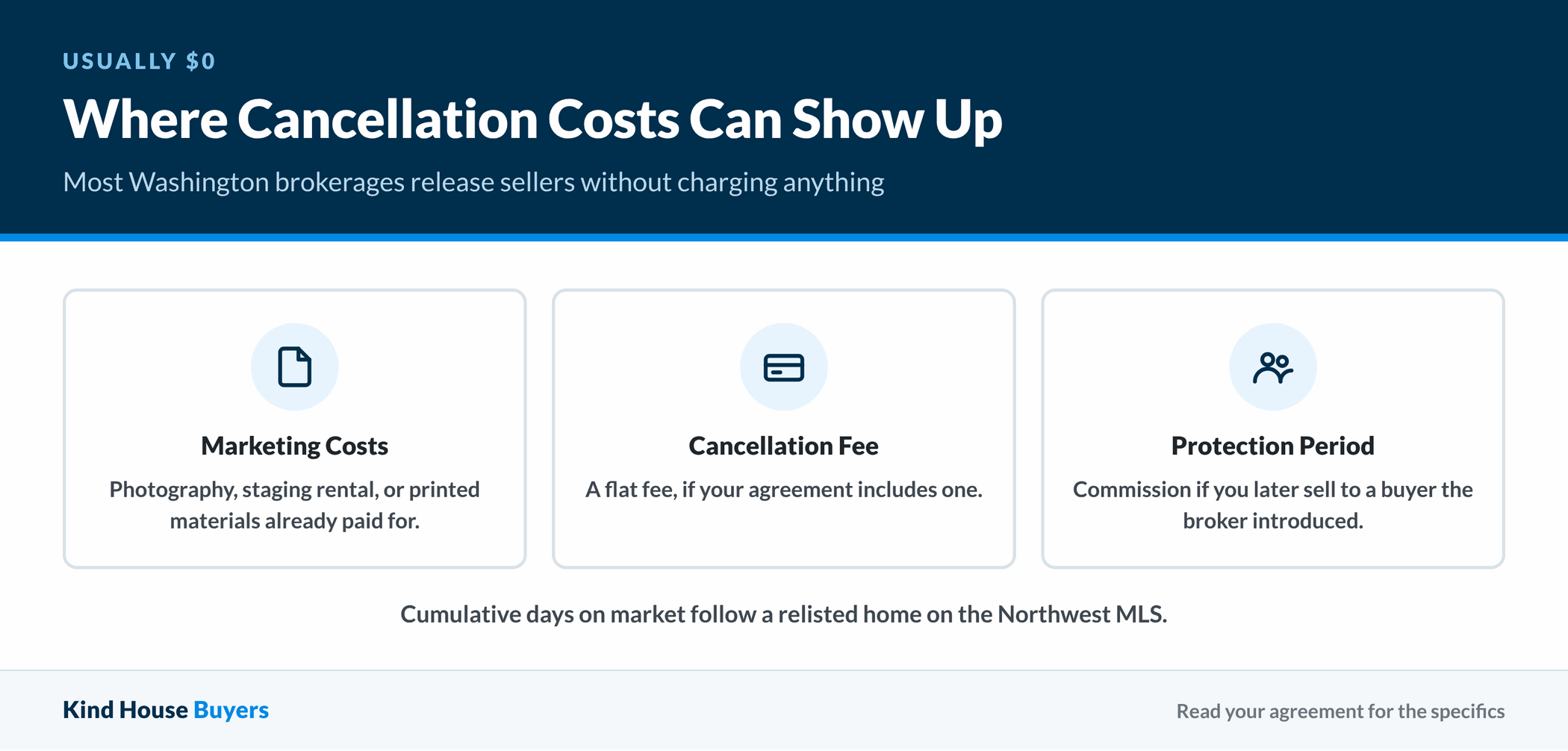
Zero dollars is the most common answer, and sellers rarely believe it. Most Washington brokerages release sellers without charging anything, because chasing a few hundred dollars from an unhappy client isn’t worth the reputational cost.
Costs show up in three places when they show up at all. Marketing reimbursement is the usual one, covering photography, staging rental, or printed materials the brokerage already paid for, so you’re on the hook for money already spent. Some agreements include a flat cancellation fee. And a protection period can create commission liability later if you sell to someone your broker introduced.
That third one deserves attention. Say your broker showed your Tacoma house to a buyer in June. You cancel the listing agreement in July, and that same buyer circles back in September. Commission may still be owed under a typical protection clause.
There’s also an indirect cost nobody invoices you for: cumulative days on market. The Northwest MLS tracks cumulative days active across relisting periods, and Seattle homes were taking a median of 22 days active to sell as of the October 2026 Seattle market report from Beyond.
My honest read: cancellation costs are usually smaller than the money lost by staying in a listing agreement that isn’t working. Four more months of mortgage payments, utilities, and Washington property taxes on a house that isn’t selling costs more than a staging invoice.
Sellers who want to avoid any commission sometimes close directly with a local buyer after the listing agreement ends.
What Should You Check Before Signing Your Next Listing Agreement?
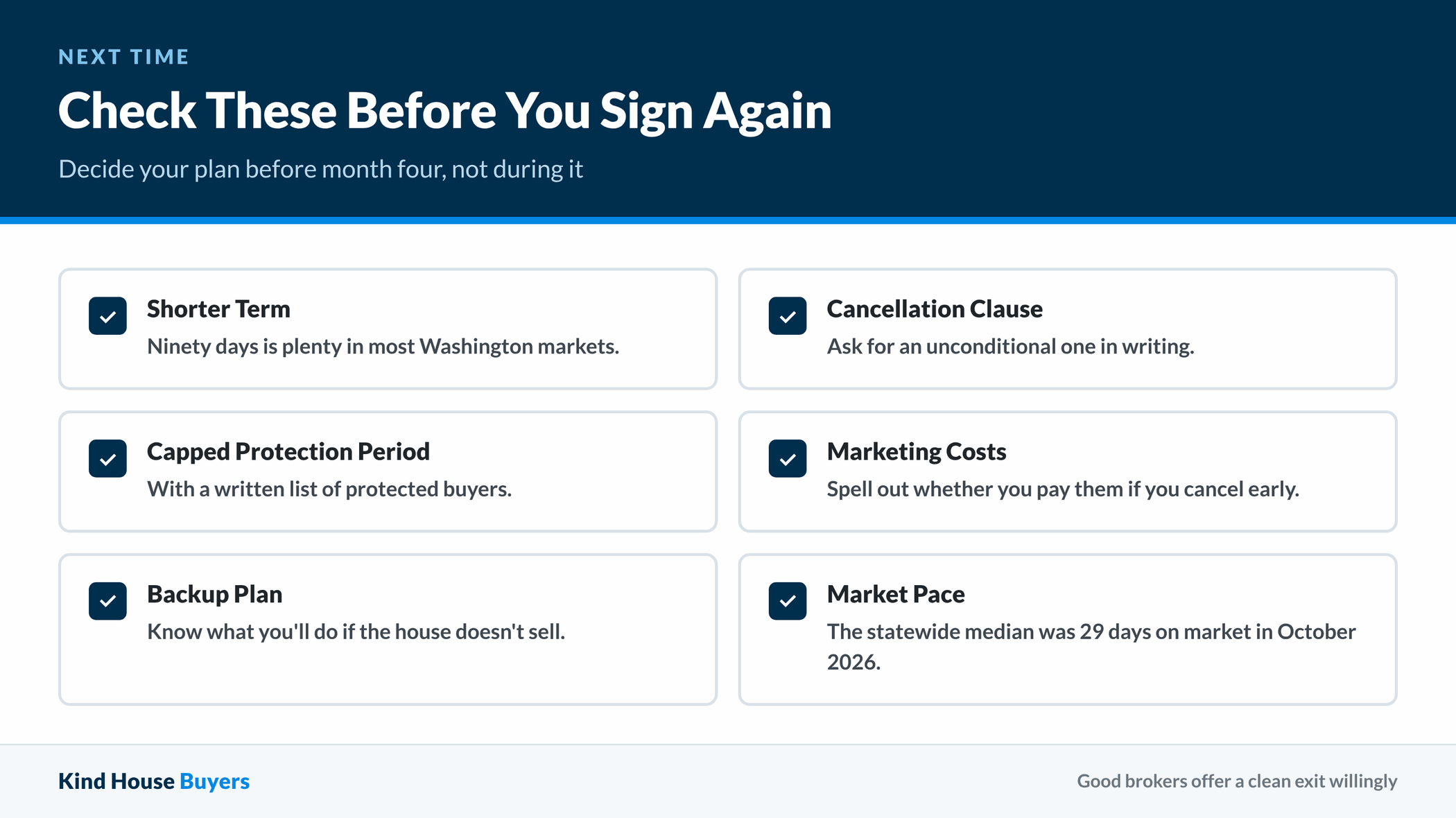
Never sign a six-month listing agreement with a broker you just met. Ninety days is plenty of runway in most Washington markets, so a shorter term forces a real conversation about performance instead of an automatic renewal you forgot about.
Ask for an unconditional cancellation clause in writing. Good Washington brokers offer these willingly, since confident agents don’t need contracts to hold clients. If someone resists putting a clean exit into your listing agreement, that tells you something about how the next ninety days will go.
Three other items deserve your pen. Cap the protection period and require a written list of protected buyers. Clarify in the listing agreement whether marketing costs become your responsibility if you cancel early.
What’s your actual plan if the house doesn’t sell? Decide that before you sign, not in month four. Washington’s statewide median sat at 29 days on market in October 2026, and a listing drifting well past that mark needs a decision, not more waiting.
A couple in Richland came to me after watching two separate agent listings expire with zero offers. Their split-level had a detached shop packed with a half-restored boat and decades of tools, and every buyer who walked through saw a cleanout project instead of a workshop. They’d followed every piece of advice they were given, but the second listing agreement ended the same way the first one did.
Think about what representation is actually worth before you commit again. Brokerage serves sellers well in plenty of Washington transactions. For houses needing work, inherited properties, or timelines that won’t stretch, a direct offer from a buyer like Kind House Buyers can beat a listing agreement that keeps resetting the clock.
Frequently Asked Questions About Cancelling a Listing Agreement in Washington
Is It Better to Cancel a Listing Agreement or Just Withdraw the Listing?
Withdrawing pulls your home off the MLS while the listing agreement stays alive, meaning your broker keeps the exclusive right to sell and you can’t hire anyone else. Cancelling ends the contract itself. If you’re pausing for a few weeks to repaint or handle a family situation, withdrawal makes sense. If you’ve lost confidence in your broker, push for a full cancellation with a signed release.
How Do I Officially End a Listing Agreement in Washington?
Put your request in writing to the designated broker at the firm, not just the agent who listed your house. Ask for a signed mutual termination that cancels the listing agreement, addresses any commission obligation, and names any protected buyers with a clear end date. Washington’s agency statute also lets either party end the relationship by notice, though notice alone leaves contract questions unresolved. Verify afterward that the MLS status actually changed.
Can My Broker Sue Me for Cancelling a Listing Agreement?
A brokerage can pursue a claim if it believes it earned compensation under the agreement, though lawsuits over residential listings in Washington are uncommon. The realistic risk is a commission demand tied to a protection clause, not a courtroom. Getting a written release that spells out what you owe, if anything, closes that door before it opens.
Does Cancelling a Listing Agreement Hurt My Chances of Selling Later?
Mostly no, with one caveat. Washington’s MLS tracks cumulative days active, so a relisted property carries its history forward and experienced buyer agents will notice. Giving the house a genuine reset, whether through price, condition, or a different sale method, matters more than the cancellation itself.
Can I Switch to a Different Broker Before My Listing Agreement Expires?
Only after the first listing agreement is properly terminated. Two active exclusive agreements on one property can leave you owing two commissions, and reputable Washington brokers won’t take the listing until they see your release. Handle the exit first, then interview replacements.
Do I Still Owe Commission If I Sell to a Buyer I Found Myself?
Under an exclusive right to sell listing agreement, usually yes, for the entire term and often through the protection period afterward. That clause surprises Washington sellers more than any other provision in the document. Read your specific agreement, and if a buyer you personally know is circling, raise it during cancellation talks rather than after.
If you’re sitting with a listing agreement that isn’t working and you’d like to think through what your options actually look like, reach out. We’ve bought houses across Washington in every condition you can imagine, and sometimes the right answer is staying with your broker. No pressure either way, and no obligation to do anything but talk it through.
Leaving a Listing in the Tacoma Area
Homes in Tacoma averaged 25 days on market in September 2026, based on RexMont’s monthly listing data. A house that’s sat well past that usually needs a change, whether that’s a new broker, a new price, or a different way to sell. Pierce County sellers who want out of a stalled listing have more choices than they think.
Talk With Kind House Buyers Before You Relist
If your listing agreement isn’t working and you want to compare options, contact Kind House Buyers for a no-obligation cash offer. You can also fill out the form below.