![How Long Does A Real Estate Contract Last [market_city]](https://image-cdn.carrot.com/eyJidWNrZXQiOiJwcm9kdWN0aW9uLmNhcnJvdC11cGxvYWRzLm9uY2Fycm90LmNvbSIsImtleSI6InVwbG9hZHMvc2l0ZXMvMjU4NzAvMjAyNi8wOC9Ib3ctTG9uZy1Eb2VzLUEtUmVhbC1Fc3RhdGUtQ29udHJhY3QtTGFzdC5wbmciLCJlZGl0cyI6eyJyZXNpemUiOnsid2lkdGgiOjExNTJ9LCJ0b0Zvcm1hdCI6IndlYnAiLCJ3ZWJwIjp7InF1YWxpdHkiOjcwfX19)

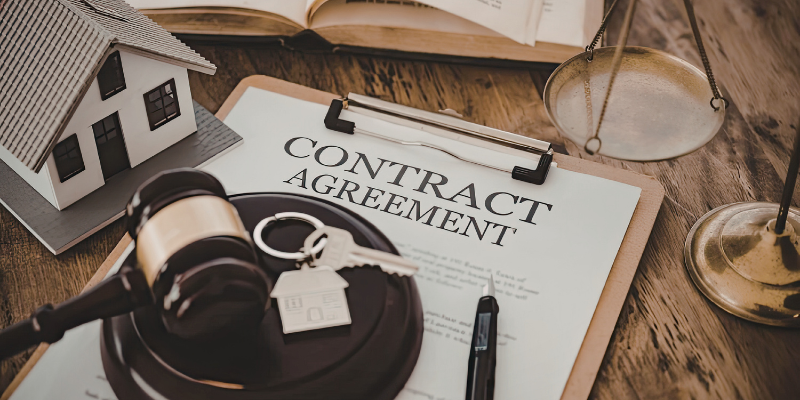
Signing something you don’t fully understand ranks among the most stressful parts of selling a house. The paperwork lands on your kitchen table, thick and packed with deadlines, contingencies, and legal-sounding clauses, and nobody stops to explain what you’re agreeing to or for how long. Let’s fix that.
What Is a Washington Real Estate Contract?
Plenty of sellers treat a real estate contract like a formality, first-timers most of all. They figure it’s just paperwork that confirms what everyone already settled on the phone. Later, they learn the truth. The document itself controls how long the timeline runs, who owes money if things fall apart, and what happens when one party wants out.
Washington’s residential purchase and sale agreement is a legally binding contract between seller and buyer that moves the property from one to the other. Every key term lives inside that agreement the moment both parties sign. Price, timing, contingencies, all of it. A verbal promise counts for nothing unless it’s written into the contract.
That agreement commits a buyer to an offer to purchase real estate on specific terms. The negotiated details cover the purchase price, the financing method, and the closing date. A seller who thinks a handshake locks those in gets an unpleasant surprise fast. It usually comes the first time a buyer’s agent points to an overlooked clause, and that clause is often about repairs.
Last year a family in Burien came to me after their elderly mother moved into a memory care facility. Her adult children needed a fast, clean sale to cover the care costs. They’d verbally agreed on a price with an interested neighbor. Nobody put a written contract in place. Two weeks passed, the neighbor cooled off, and the family was left with nothing enforceable. We stepped in through Kind House Buyers, wrote them an offer within 48 hours, and closed on a timeline that fit their situation. The lesson was simple: an agreement you can’t point to on paper isn’t an agreement, and memory care costs don’t pause for a handshake.
Washington State requires sellers to disclose any material defects in a property. That usually happens through a standardized disclosure form set by statute. The obligation is baked into the contract from the start, not bolted on at the end.
What Must Be Included in a Washington Real Estate Contract?

Miss a required element in your purchase and sale agreement, and the fallout is real. You could end up with an unenforceable document, a lost earnest money deposit, or a transaction that collapses at the title company after you’ve started planning your move. I’ve watched it happen on closing day.
A completed agreement has to describe the property being sold, the purchase price, the closing date, and the closing costs. Any additional property that comes with the sale belongs in there, too. So does any financial or insurance obligation the seller wants met. Leave it out of the agreement, and it doesn’t bind a soul.
The purchase and sale agreement spells out the agreed price and the financing details. If the buyer is getting a mortgage, the contract can add loan approval contingencies that guard against financing trouble. Those contingencies decide a lot, since they’re where most transactions either hold together or quietly start to unravel, so every word in that section earns a slow read before you sign.
Earnest money is the good-faith deposit that shows the buyer means it. In Washington State, it’s usually held in escrow, and it can be refunded or forfeited depending on the contract terms. This earnest money deposit gets misunderstood more than almost any other piece. Sellers can lose access to it too, not just buyers, if they breach the agreement.
State law under RCW 18.86.120 makes real estate brokers hand you a pamphlet. It explains the different relationships an agent can have with buyers and sellers. Older homes carry a second layer, the federal lead-paint disclosure rule. Sellers of properties built before 1978 must disclose any known lead-based paint hazards. Buyers get a federally approved safety pamphlet and a ten-day period to run a risk assessment.
Common Types of Real Estate Contracts Used in Washington
Sellers often ask whether any of this applies when they skip the agent, or when they’re doing something other than a standard sale. It’s a fair thing to wonder. The type of contract shifts from one situation to the next, but the legal weight behind it never lightens.
Listing with an agent usually means choosing between an exclusive right-to-sell agreement and an exclusive agency agreement. The exclusive right-to-sell is the common one. Under it, the agent holds exclusive rights to sell the property. Even if the seller finds a buyer independently, the agent’s commission is still owed.
Under an exclusive agency agreement, a seller who finds the buyer independently can skip the agent’s commission entirely. Appealing, until you learn most agents won’t touch a listing on those terms. Their incentive to market your property hard just shrinks.
Beyond listing agreements, Washington sellers run into buyer representation agreements too. A settlement that took effect in August 2024 changed the timing. Now a buyer representation agreement has to be signed before an agent shows a buyer any property. Agents also need signed commission agreements that spell out compensation before the home search starts. That pushed the whole commission conversation earlier than it used to sit.
Family transfers, estates, and probate matters bring in a different document: the deed. Warranty deeds, quitclaim deeds, and statutory warranty deeds each carry their own title guarantees and their own legal exposure. Pick the wrong one for a probate or divorce transfer, and the mistake can haunt a title for years. I’ve watched it create real headaches once the property finally sells.
Some homeowners decide that avoiding the uncertainty of a traditional sale is the better option. If you’re looking to sell your house fast in Tacoma, working directly with a local cash buyer like Kind House Buyers can simplify the entire process. Instead of navigating multiple contingencies, financing delays, and lengthy inspection periods, you receive one straightforward written offer with a closing date that fits your timeline. That means fewer complications, more certainty, and a faster path to selling your home.
How Long Does a Real Estate Contract Last in Washington?
Picture someone at their kitchen table with a purchase and sale agreement in front of them. The honest answer is short. The contract lasts exactly as long as both parties agreed it would, and not a day past that unless someone negotiates an extension.
In Washington State, closing usually lands within 30 to 60 days of signing. So a standard purchase and sale agreement really lives about one to two months, from signature to closing. Deadlines can slip if financing falls through, inspections drag, or a title issue surfaces. That slip only counts with written consent from both sides.
Washington’s median days on market in September 2025 came to 35 days, up 8 days year over year. That means homes sat just over a month before going under contract. Stack the 30- to 60-day closing period on top of that. A seller on a standard timeline, from list to keys in hand, is looking at two to three months total. That’s real time if you’ve got a move date to hit.
As of May 2026, Washington’s median home sale price sat at $612,823, with homes spending a median of 31 days on the market. That’s the statewide picture. Zoom into a neighborhood like Capitol Hill in Seattle, or the South Hill area of Puyallup, and the pace and pricing can look nothing like those averages.
Listing agreements with agents run on a separate clock. That listing window usually ranges from three to six months. A seller who skims that clause can end up locked in with an agent long after the confidence is gone. Check the agreement for an automatic renewal clause. If it’s there, get it struck before you sign.
I’ve watched sellers in the Maple Valley area sign a six-month listing agreement and miss the protection period clause. That clause kept the agent’s commission alive for 90 days after the agreement expired. Switching strategies carries a real cost.
How Many Years Before a Quitclaim Deed Becomes Effective in Washington?

For years, I assumed a quitclaim deed didn’t fully take effect until some waiting period had run its course. I had it backward.
A quitclaim deed in Washington takes effect the moment it’s properly executed and delivered to the grantee. Recording it is what shields that transfer from competing claims by third parties. A deed has to be acknowledged before it can be recorded. Once it’s acknowledged, it goes on file with the county auditor in the county where the property sits, and that office sets the fee. The governing statute is RCW 65.08.070.
Under Washington statute, every deed in quitclaim form, when otherwise duly executed, counts as a good and sufficient conveyance of the grantor’s then-existing legal and equitable rights in the property described. It doesn’t reach after-acquired title, though, unless words are added to express that intent. That detail matters a lot in estate and probate cases. The deed only transfers what the grantor actually owned at signing. So an heir who inherits more interest later doesn’t automatically pass it along.
Washington runs on a community property system. That means implied or express consent from both spouses before either one can give away community property. Families moving a property after a death or divorce trip over this constantly. Both spouses, or the estate’s legal representative, have to join the conveyance.
There’s no multi-year waiting period after a quitclaim deed is signed. The deed works the instant it’s validly executed and delivered. Recording it promptly through your county auditor’s office is the smart protection step, not a legal prerequisite for the transfer to bind the parties. If you’re unsure how ownership, liens, or title encumbrances affect a quitclaim in your case, start with your county auditor’s office. They can point you to the recording requirements. A local real estate attorney can review the title itself.
Is It Better to Buy Land or Rent for Construction in Washington?
Land ownership carries a cost that construction lease agreements quietly sidestep. From the day you close, you’re on the hook for property taxes, any existing liens, and carrying costs. That’s true even if you haven’t broken ground yet.
Buying land in Washington hands you full ownership rights. You can sell it, subdivide it (county zoning permitting), and finance against the property. A ground lease works differently, letting a developer or builder use the land for construction without taking title and paying rent through the build instead. Renting costs less upfront, sure. But the builder puts up a structure on land they’ll never own, which tangles financing and any exit strategy.
For most individual sellers reading this, the land-versus-lease question shows up one way. You own a lot in a place like Redmond, Marysville, or East Wenatchee, and someone wants to build on it. Selling outright gives you a clean, taxable exit. A ground lease gives you steady income but keeps you in the landlord business for good.
Washington’s counties show sharply different land values. Raw land in King County and the Eastside suburbs carries different carrying costs and appreciation potential than farm parcels out in Yakima or Kittitas County. Get a real appraisal on bare land before you decide, not just a Zillow estimate. That conversation is worth paying for.
If you’re deciding whether to sell a property with an existing structure or hold onto it a little longer, it’s worth looking at the numbers before making a move. If a quick, straightforward sale makes more sense, Kind House Buyers is a local option to consider. We buy houses in Washington in any condition, helping homeowners skip the hassle of repairs, listings, and lengthy negotiations. Reach out to discuss your options and get a no-obligation cash offer that fits your situation.
How Do You Find a Real Estate Lawyer in Washington?

A referral from someone who’s survived a complicated transaction beats any online directory.
The Washington State Bar Association runs a lawyer referral service, and most county bar associations do too. For real estate contract work, you want someone who practices mainly in Washington real estate law, not a general attorney who dabbles in property matters. Ask them flat out what share of their practice is residential real estate transactions.
Its online directory at www.wsba.org lets you search by practice area and county. That’s how you find attorneys who know King County title customs, not just attorneys who mostly work in Spokane or Clark County. These aren’t interchangeable markets. Customs around earnest money handling, escrow procedures, and contingency structuring can vary in practice even when the statute reads the same statewide.
Probate situations, properties with liens, ownership disputes- all of them call for counsel sooner rather than later. Waiting until the day before closing to loop in a lawyer is the pattern I watch go sideways most. The attorney’s job gets harder and pricier the longer the underlying problem sits unaddressed. In my experience, that delay almost never pays for itself.
What Do Washington Real Estate Attorneys Charge for Contract Help?
Cost is the question everyone lands on eventually.
It depends on what you need. A quick contract review is a different animal from full representation through closing. Real estate attorneys charge a flat fee of $500 to $1,500 for a standard residential closing, or $150 to $500 an hour for the complex stuff. Across all states, attorneys average around $550 for a real estate contract review.
For full representation from contract drafting through closing, some Washington firms use a flat fee. One Washington State firm charges $2,495 to represent either the buyer or the seller, from the initial contract draft all the way through closing. That’s a real number, but it’s fixed and predictable, which is more than you can say for open-ended hourly work.
If the transaction gets complicated, expect the billing to shift. Scope creep into disputes or litigation flips things to hourly. A contract dispute between a buyer and seller in Tacoma or Kirkland can rack up attorney fees that dwarf the original review cost. That’s exactly why getting the contract right the first time is worth the upfront money.
A homeowner in Kenmore found themselves stuck with a rental they never planned to keep after inheriting it from a relative. After years of dealing with tenant issues, a garage full of abandoned belongings, and a broken window that had gone unrepaired for months, they decided it was time to move on. Instead of investing more time and money into the property, they accepted a direct cash offer, chose a closing date that fit their schedule, and completed the sale before the end of the month. No listing, no endless showings, and no unnecessary delays. If you’re in a similar situation, Kind House Buyers buys houses for cash in any condition, making it easier to move on without the usual hassle. Call us today to see how a straightforward cash sale can work for you.
Frequently Asked Questions
How Long Do Realtor Contracts Usually Last?
Listing agreements in Washington usually run from three to six months, which gives the seller and the agent a defined window for the sale. Some agents push for the longer end, especially in slower markets. You can negotiate here, and you should. A three-month agreement with an option to extend is a reasonable ask, and a good agent won’t blink at it.
Can a Home Seller Cancel the Contract at Any Time in Washington?
Not freely. Once you sign a purchase and sale agreement, you’re bound to its terms. Walk away without cause, and you can face real legal liability, from losing control of your earnest money to a buyer’s claim for damages. Your exit depends on whether the buyer is in breach, whether a contingency has failed, or whether your contract carries a specific termination clause. An attorney can walk you through the real options before you make any move.
How Easy Is It to Get Out of a Real Estate Contract?
It comes down to timing and which party wants out. Before both sides sign, either one can walk with no consequences. After signatures, the exits narrow fast. Unfulfilled contingencies, like financing or inspection, give buyers a legal path out with their earnest money deposit intact. Sellers have fewer built-in escapes, and trying to cancel without a valid contractual basis tends to land in mediation or court. If you feel trapped in a transaction you regret, talk to a Washington real estate attorney before you act on your own.
What Is the 5 Year Rule in Real Estate?
The five-year rule is a general guideline, not a Washington statute. It suggests homeowners plan to hold a property at least five years before selling, long enough to recoup the transaction costs of buying and break even on appreciation. That framework made more sense in slower-appreciating markets. In Washington, where prices in many areas have jumped over shorter stretches, the math can work out faster. A short hold during a downturn, though, can still end in a net loss. No legal rule is attached to the number. It’s planning guidance.
If you’re sorting through the timeline on a real estate contract, or just trying to map out your options, we’re glad to help you think it through. No pressure, no obligation. Reach out to Kind House Buyers whenever you’re ready, and we’ll have an honest conversation about what fits your situation.