
A contractor once told me windows are the only home improvement people pay for twice: once for the house, and once for the story they tell buyers about it. He had a point. Sellers spend five figures, then stand in the living room explaining the argon gas fill to a couple who made up their minds in the kitchen. If you’re weighing whether to replace windows before you list, the money question deserves a straight answer, and it isn’t the answer window companies give.
Do Window Replacements Pay Off When Selling a Home?
For years I told sellers that fogged glass would sink a sale, and I was overstating it. Buyers see fogged glass. They rarely walk away over it.
What they do is subtract. A buyer who spots eight cloudy sashes starts pricing in their head what it would cost to replace windows. Their mental number almost always runs higher than the real one, because buyers assume the worst-case contractor quote. The gap between those two numbers is what old windows really cost you.
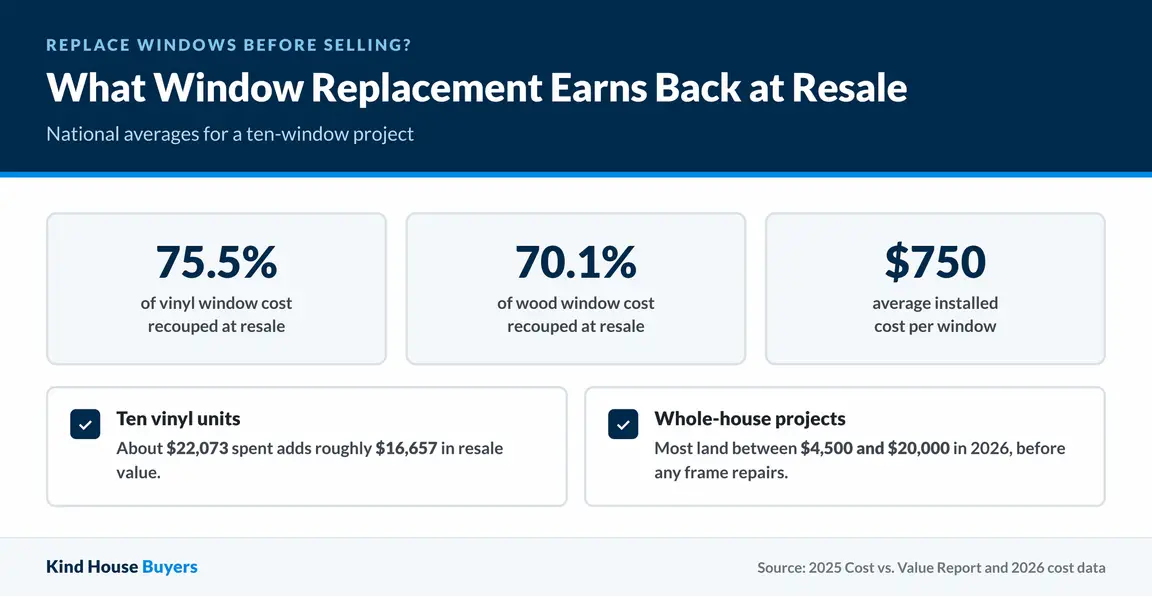
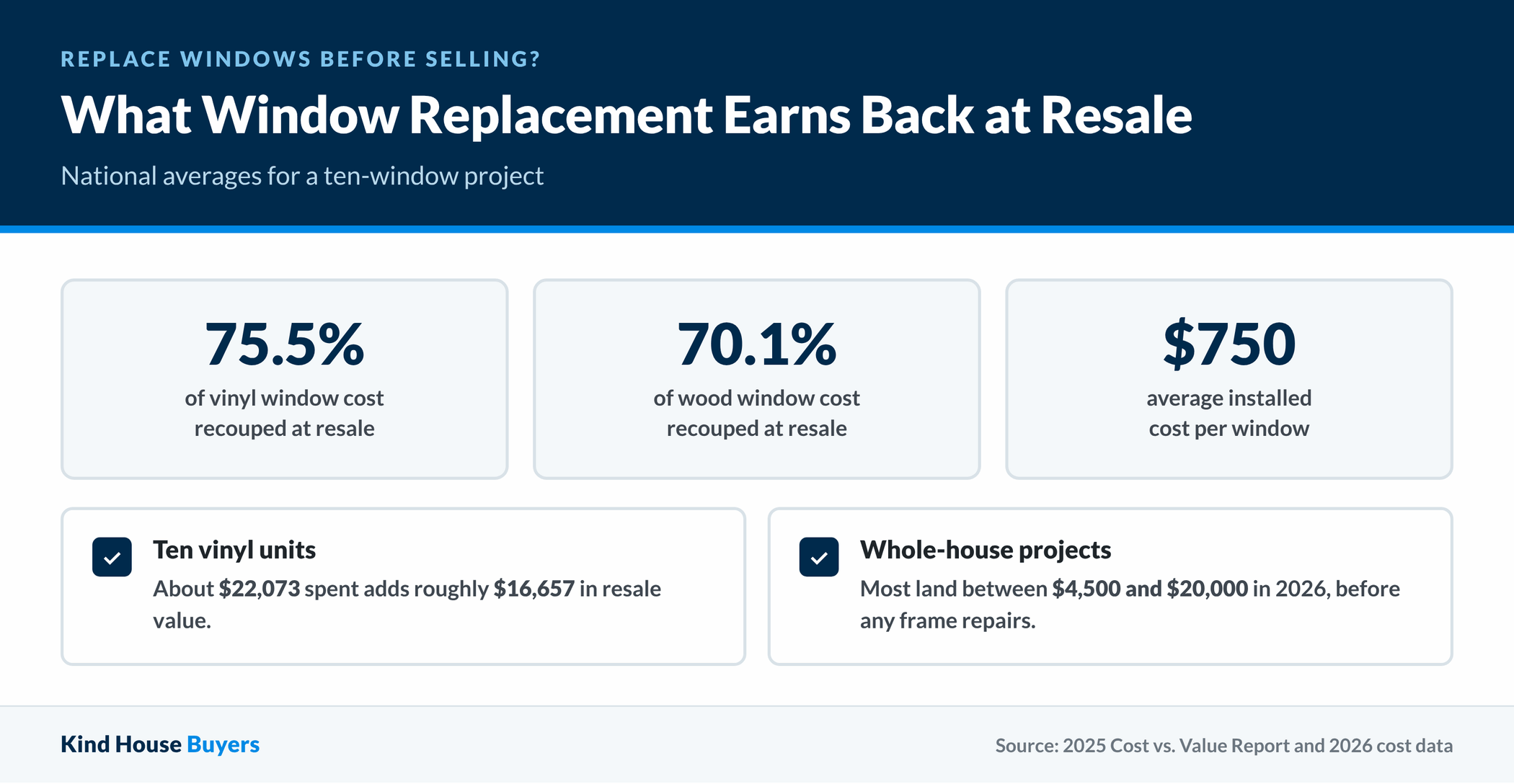
So should you replace windows before you sell? My honest read is usually no, not all of them, and not right before listing. National data backs that up. Vinyl window replacement recoups about 75.5 percent of its cost at resale, according to the 2025 Cost vs. Value Report, and wood comes in at 70.1 percent. You’d be handing over roughly a quarter of the spend for a cleaner listing photo.
A while back I bought a small ranch from a widow outside Yakima who’d rented it out since her husband passed and was done with the whole thing. Every window was original aluminum, the kind that sweats all winter. She’d gotten a quote to replace windows throughout the house and nearly signed it, until she realized she’d never see that money again at the closing table.
Timing changes the math, too. Say you plan to stay five more years and your heating bills are brutal. Then it makes sense to replace windows as a living expense that you happen to recoup part of later. A seller trying to close in three months is running a different calculation entirely.
Do Old Windows Lower Your Home’s Sale Price?
“Will buyers knock twenty grand off my price if I don’t replace windows first?”
Not usually. What happens is slower and quieter: fewer showings, longer days on market, and a negotiation that starts lower than it should. In October 2026, homes nationally sat a median of 35 days on the market, up from 33 days in September and 34 days in October 2025. Tired windows push you past that typical number.
Prices have held up better than expected in a slow market. The median existing-home price hit $416,700 in October 2026, 0.4% above the prior October, marking the 40th straight month of annual gains in NAR’s October existing-home sales report. Nobody’s getting discounts across the board. Buyers get them on houses with visible problems.
Appraisers treat windows as one line in a condition rating, not a standalone adjustment, so an appraiser won’t deduct what it would cost to replace windows from your valuation. A buyer’s lender rarely cares whether your double-hung units are original unless something is broken, rotted or missing a pane.
The real price hit comes from the pile-on effect. Old windows plus worn paint plus a dated door reads as deferred maintenance, and deferred maintenance is exactly what buyers negotiate against. One tired feature is character. Four is a project.
Condensation between panes triggers more price pushback than any other window detail I see. You can spot it from the curb, it photographs badly, and buyers correctly read it as a failed seal.
What Buyers Notice When Windows Need Replacing
And what buyers notice has almost nothing to do with U-factor. They notice whether the sash slides. During a showing, a buyer will walk up to a window, grab the lower sash and shove. If it sticks or screeches, that moment stays with them longer than any spec sheet.
Sound gets less credit than it deserves. On a busy street, a buyer standing in the bedroom hears the traffic and ties it straight to the glass. Nobody writes “noise” on an offer, though it still shows up in the offer price.
I keep running into the same pattern: sellers polish the exterior and ignore the inside of the frame, even though buyers look at the sill. Peeling paint, soft wood and water damage along the bottom rail tell a story about the whole house, fair or not. Scrubbing and repainting sills costs a weekend and does more for perception than paying to replace windows would.
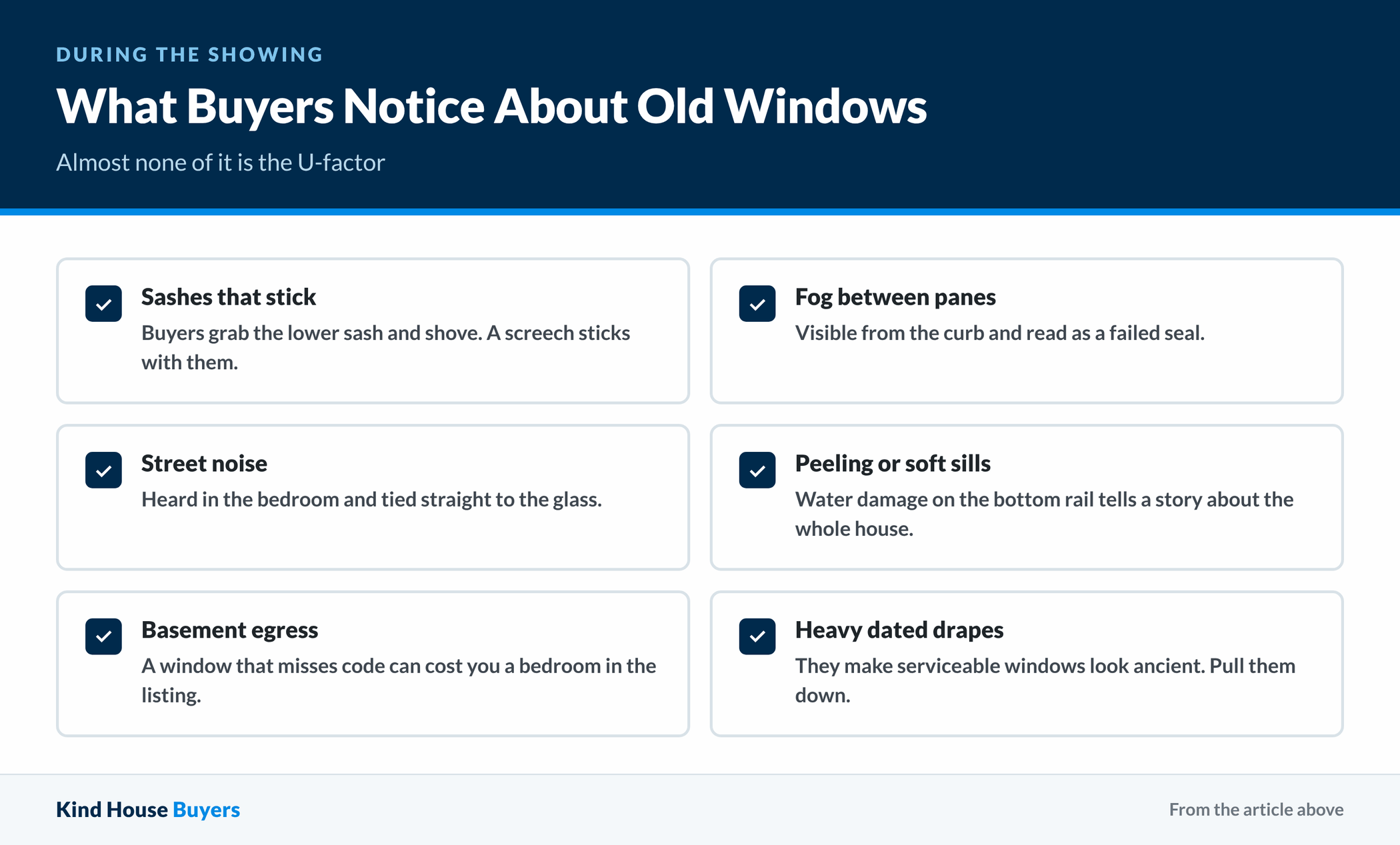
Is there a bedroom in a finished basement? Then one detail outranks everything else here. An egress window that doesn’t meet code hands an inspector something concrete to flag. It can decide whether that room counts as a bedroom in the listing, and I’ve seen it tank an appraisal more than once. Losing a bedroom from your square footage hurts far more than cloudy glass ever will.
Shoppers also read curtains and blinds as part of the window. Heavy dated drapes make serviceable units look ancient. Take them down, let the light in, and the same windows look different.
Investors walking the same house feel none of this. We price the work and move on. That’s why sellers who’d rather skip the cosmetic theater find a direct buyer like Kind House Buyers simpler to work with than a retail buyer who wants you to replace windows before closing.
What Sellers Must Disclose About Old Windows
Plenty of sellers believe that selling a house “as-is” wipes out their duty to say anything about the condition of the glass. It doesn’t. As-is governs who pays for repairs, not what you’re obligated to reveal, and that distinction has cost sellers real money.
Disclosure rules come from each state, not the federal government. Requirements differ across all 50 states, and no single federal disclosure statute covers residential real estate, though federal law does mandate disclosure for lead-based paint and a few other conditions. Some states hand you a detailed checkbox form. Caveat emptor states like Alabama and Arkansas impose minimal or no mandatory disclosure. Sellers there still can’t commit fraud or hide known defects.
Lead paint is the one rule that follows you everywhere. Federal law requires disclosure of known lead-based paint hazards in most homes built before 1978, in every state. Old wood windows in pre-1978 houses are a classic place to find lead paint, since the friction surfaces shed dust every time they open and close. Your state real estate commission publishes the exact form you need, and the EPA lead disclosure rule page explains the federal paperwork that applies to older homes everywhere.
So what goes on the form? Known leaks, broken seals, sashes that won’t open, rot you’ve patched. Vague answers invite trouble, and specific ones close the door on future claims.
One more thing worth flagging: if you replace windows and the work needed a permit your area requires, an unpermitted install can surface during the buyer’s inspection. Your local building department can tell you what triggers a permit where you live. A half-finished fix you never mention is worse than leaving the window alone.
Do New Windows Really Add Value to a Home?
Spend about $22,073 swapping out ten vinyl units and the report pegs the added resale value near $16,657. That’s the headline number, and it’s an average across markets, not a promise about your house.
Energy performance is the part that moves buyers in 2026, mostly because they’ll be paying the bills. Certified windows can cut heating and cooling bills by up to 13 percent compared with non-certified products, according to ENERGY STAR, and that savings keeps coming whether or not you sell. Pair efficient glass with a sound HVAC system and the house reads as cheap to run.
The federal incentive picture has shifted, and anyone quoting you a tax credit is behind. Congress ended the Energy Efficient Home Improvement Credit for property placed in service after December 31, 2025. If you replace windows in 2026, they don’t qualify federally, per the IRS guidance on the One Big Beautiful Bill changes. Ask your utility about local rebates, since several still run their own programs.
Where new windows do pay off is speed. Homes with updated windows reportedly sell around 8% faster, and with inventory climbing, speed has a dollar value. Fewer carrying months, fewer price cuts.
My opinion, plainly: if you replace windows purely to boost your valuation, you’ve picked a mediocre investment. Paint, landscaping and a clean roof return more per dollar, so new glass earns its keep only when the old units are failing.
How Much Does It Cost to Replace Windows Before a Sale?
“My contractor quoted me $400 a window, so a whole house is cheap.” That quote is for the window, not the job. To replace windows with professional installation, expect about $750 per window on average in 2026, and most whole-house projects land between $4,500 and $20,000.
Material drives a chunk of the spread. Vinyl sits at the affordable end and performs fine. Wood costs more and suits historic or high-end homes where it’s the norm, and casement windows and odd sizes push the price up because they’re less standardized than a basic double-hung.
Then there’s the part a quote often buries, which is whether you need an insert or a full-frame install. An insert slides the new unit into the existing frame and costs less than a full-frame install because the old frame stays, but it only works when that frame is still sound. Rot in the frame means full-frame work, and your estimate climbs.
Don’t forget the calendar. A whole-house job takes more than a weekend. Between ordering, manufacturing and scheduling, you can easily lose two months before the crew shows up, and custom sizes stretch that further.
I’ve watched sellers rush to replace windows in October, wait on backordered units and miss their listing window completely. Carrying costs ate the gain. If your timeline is tight, that risk alone should settle it.
Putting the job on a credit line adds interest to a project that already returns less than you put in. Run that math before you sign anything.
What to Do Instead of a Full Window Replacement
Replacing three bad windows out of twenty-two often beats replacing all twenty-two, because buyers judge the worst one they see, not the average. Fix the eyesores. Leave the rest.
Start with glass that’s failed. A local glazier can swap a fogged insulated unit into the existing sash for a fraction of what it costs to replace windows outright, and the cloudiness disappears from your photos. Most sellers never hear about this option.
Next, free up the stuck ones. Scraping old paint out of the tracks, replacing broken sash cords and adding a little silicone lubricant turns a “broken window” into a working one by inspection day. It’s the same window with a completely different impression.
Caulk, weatherstrip, repaint. Fresh exterior trim paint in a crisp color does more for curb appeal than paying to replace windows, and it signals maintenance rather than neglect. Give the interior sills the same treatment.
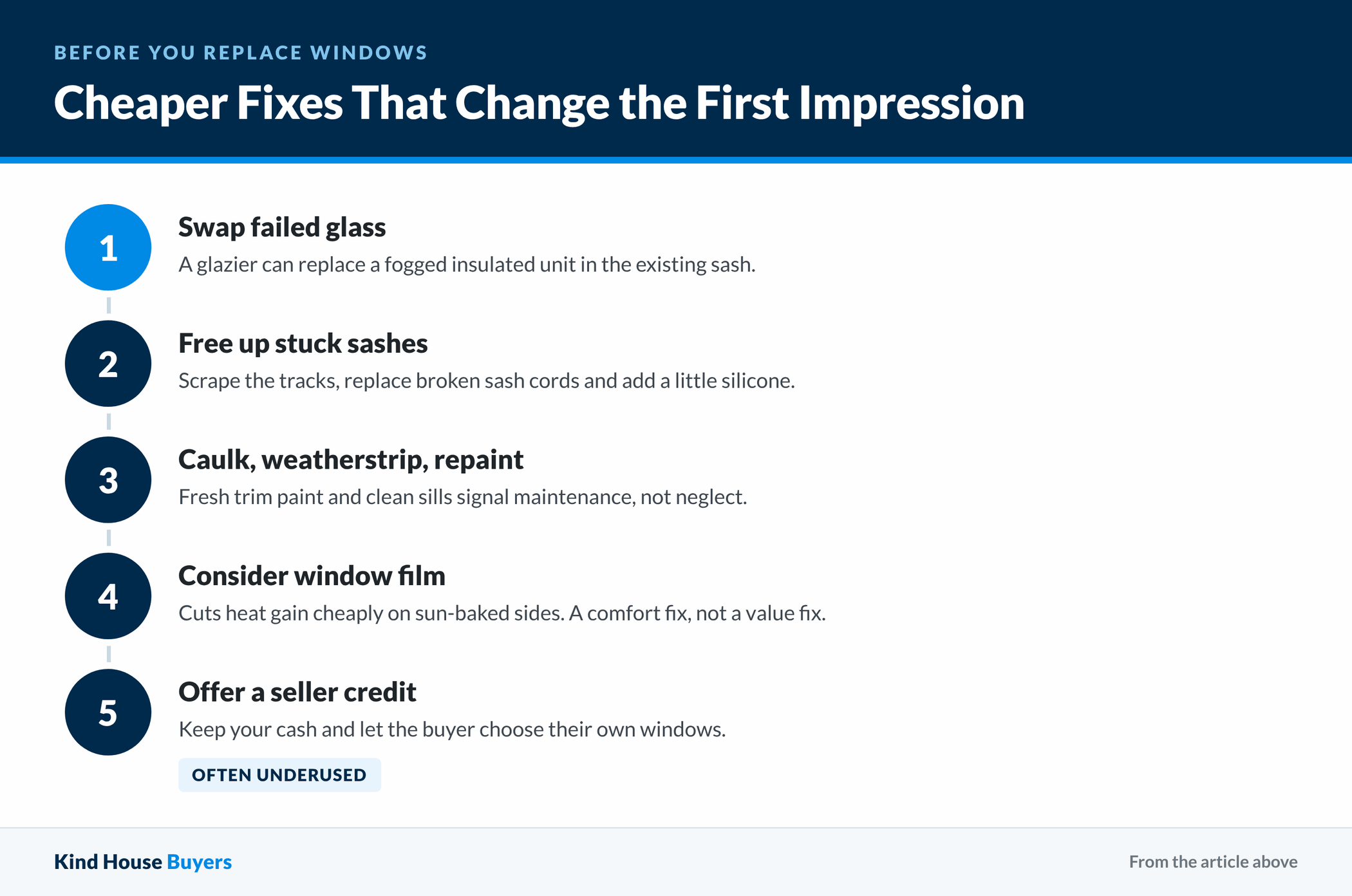
Window film is worth a mention for houses with brutal sun exposure. It cuts heat gain cheaply, though it’s a comfort fix and won’t add value.
A buyer credit is the other lever, and I think it’s underused. Rather than replace windows yourself at full retail, offer a seller credit at closing and let the buyer choose their own units. You keep your cash, they get control, and negotiations stay friendly. In October 2026, cash sales made up 29% of transactions, up from 27% in September, per that same NAR report. Cash buyers in particular tend to prefer a price adjustment over work done on their behalf.
Hang on to every warranty document you have, too. A transferable warranty on windows you replaced five years ago is worth mentioning in the listing.
Can You Sell a House Without Replacing the Windows?
One landlord in Spokane Valley, Washington called me on a Tuesday with a job transfer and five weeks to be gone. His duplex had original single-pane windows, a garage full of tenant leftovers, and no room in that timeline for a window project.
We closed before his moving truck left. There was no new glass, no painting and no staging.
Yes, you can absolutely sell a house without having to replace windows first. Millions of homes trade every year with original units, and buyers finance them without trouble as long as the glass isn’t broken and the frames aren’t rotting through. FHA and VA appraisers care about safety and soundness, not efficiency ratings.
Your real choice is who you sell to. Retail buyers using a mortgage want move-in condition and will negotiate against anything that looks like a to-do list. Investors and cash buyers price the condition into the offer up front and skip the back-and-forth. Which of those two paths fits your situation better?
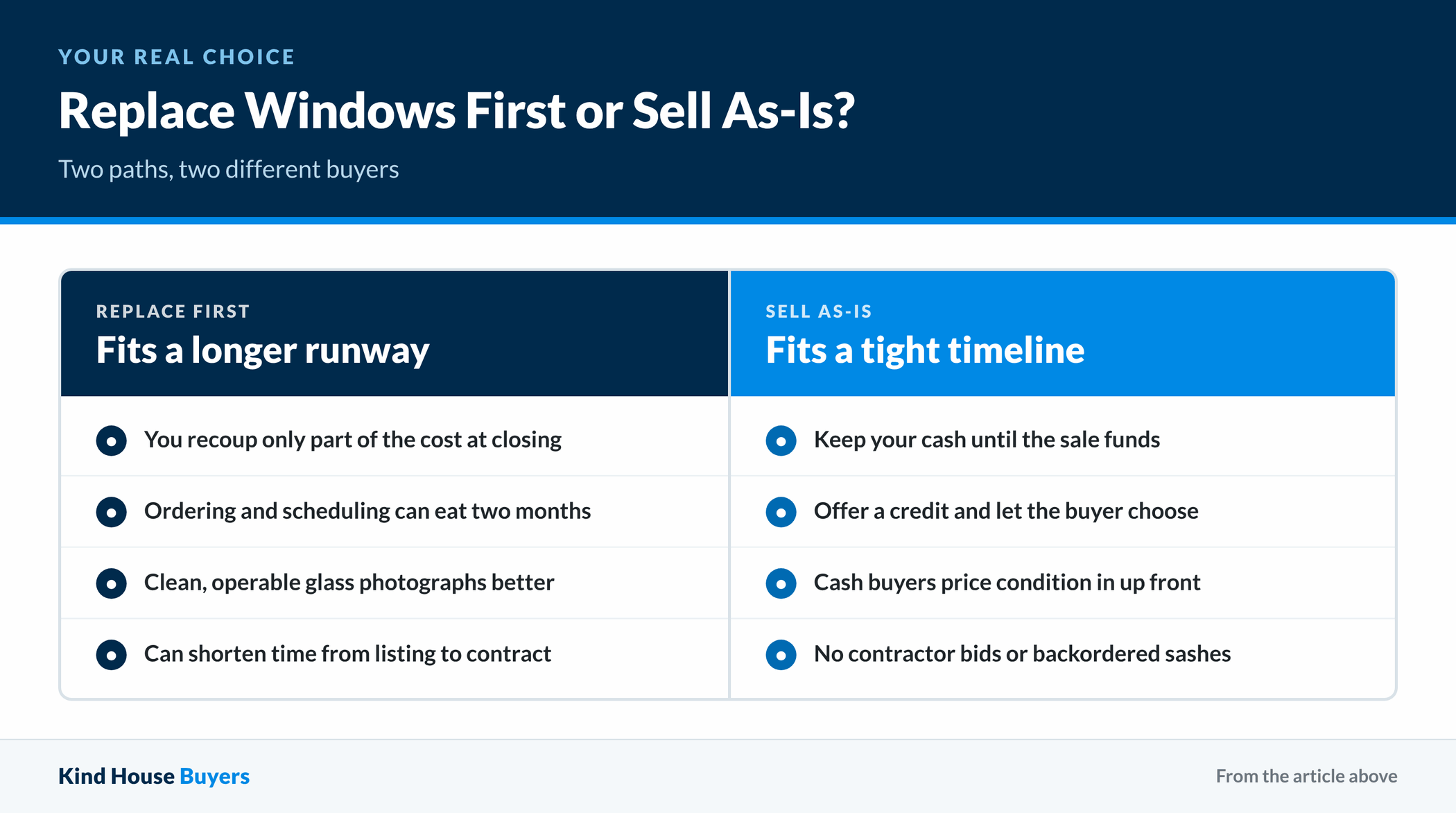
Right now the market rewards sellers who are realistic. Inventory reached 1.59 million units in October 2026, with supply at 5.1 months, up from 4.4 months a year earlier. Buyers have choices, so a house with obvious deferred maintenance competes on price against houses without it. You can replace windows with cash out of pocket, or you can simply adjust your asking number.
Teams like Kind House Buyers exist for sellers who’d rather take the second path. You won’t need contractor bids, you won’t wait on backordered sashes, and no inspector will flag a sill.
Frequently Asked Questions About Whether to Replace Windows Before Selling
When Should I Get New Windows for My House?
Get them when you’ll live with them, not when you’re leaving. With several years left in the house, failing seals, drafty rooms and climbing utility bills all justify the spend, and you collect the energy savings the whole time you stay. Selling within a year flips that logic, since you’d pay full retail for a partial return at closing.
Will a Home Inspector Flag Old Windows?
An inspector notes what’s broken or unsafe, not what’s simply dated. Cracked panes, sashes that won’t stay up, rotted wood, missing hardware and basement bedroom egress openings that miss code all make the report. Normal aging on units that still work usually gets a line about age and nothing more.
Is It Better to Offer a Credit Than to Replace Windows?
Most of the time, yes. A closing credit costs you less than paying to replace windows, keeps your cash in hand until the sale funds, and lets the buyer pick the style and color they want. Buyers often value that flexibility more than whatever you’d have picked for them.
Do New Windows Help a House Sell Faster?
They help, though the effect comes more from perception than performance. Clean, working glass photographs better and removes an easy objection during showings, which shortens the stretch between listing and contract. If your current units function and look cared for, you’ll get most of that benefit without having to replace windows at all.
Can I Replace Windows Myself to Save Money?
You can, though I’d be careful. Insert installs on standard sizes are within reach for a handy homeowner, but a bad install leads to water damage and air leaks that cost more to fix than the labor you saved. Sloppy DIY work also shows up on inspection reports, and buyers trust it less than professional work with a warranty behind it.
Does Replacing One or Two Windows Look Odd to Buyers?
Buyers do notice mismatched windows, so match the style and frame color as closely as you can when you replace only a few. They care far less about the install year than about whether the house looks deliberately maintained. A single new unit on a side elevation disappears, while one bright white frame on the front among weathered ones stands out.
What If the Windows Are Damaged and I Can’t Afford Repairs?
Then sell the house in the condition it’s in and let the price reflect it. Lenders get nervous about broken glass and missing panes on conventional financing, which narrows your buyer pool toward cash and renovation loans. That’s a legitimate way to sell, and plenty of houses close that way every month.
Selling a House With Old Windows in Tacoma
Kind House Buyers is based in the Tacoma area, where Pierce County’s median sold price reached $566,250 in early October 2026, according to Beyond Real Estate’s county report. We buy from homeowners across Washington, and the condition of the glass doesn’t change the conversation.
At that price, buyers still notice failed seals and sticky sashes, and the math on whether to replace windows looks the same as it does anywhere else. Sellers who’d rather go as-is can see how our process works.
Talk With Kind House Buyers Before You Replace Windows
If you’re sitting on a house with tired windows and trying to decide whether to spend the money or just move on, I’m happy to walk through the numbers with you. That includes what the house is worth as-is versus after work. Think of it as a second opinion from someone with no stake in selling you glass. There’s no pressure and no obligation, and if the answer is that you should list with an agent instead, I’ll tell you that too. You can contact Kind House Buyers or fill out the form below.